Written by: Cormac McCarthy
If only most novels were as good as Cormac McCarthy's first novel.
Set during prohibition, "The Orchard Keeper" weaves together the lives of three characters, connected first by a circumstance of which none of them are aware and later by their mutual contempt for the law.
Like a pitcher warming up before a baseball game, McCarthy's first novel is not quite up to his usual standards, but you can still see hints of what is to come later. The voice of the prose is not quite fine-tuned yet, but is obviously distinct. This is not a criticism, but merely an observation.
As a writer, McCarthy mastered early the ability to let the characters and their circumstances carry their own gravity. He assumes that his reader is intelligent and can make important connections without those connections being explicitly outlined or discussed. For example: whose body is Uncle Ather hiding? It's obvious, so it is never outright declared. Few writers would be so bold as to leave such an important detail unnamed, but it seems natural - if not necessary - for McCarthy to do so.
I'm not sure whether or not this would be a good place to start for newcomers to McCarthy's work. On the one hand, it's a solid general sampling of what his work is usually like. On the other hand, it's not one of his best pieces. (Although, on a side note, I feel like comparing his books to one another is a futile venture akin to comparing Hall of Fame baseball players. Is it fair to compare Joe DiMaggio to Hank Aaron? No. They were both amazing at what they did, and there's no value added by making the comparison.)
Showing posts with label fiction. Show all posts
Monday, July 2, 2012
Sunday, December 11, 2011
The Heart Is A Lonely Hunter

Carson McCullers's novel falls under the "southern gothic" genre, but in its own special way. Whereas Faulkner's prose intimidates you and beats you over the head with its brute strength, McCullers's text hums like a lullaby with a soft melody.
"The Heart Is A Lonely Hunter" is set in small-town Georgia during the great depression. It's the type of town where you know everyone else by name, and you're related to half of them by blood or marriage. Most of the story surrounds the deaf-mute John Singer and the fingerprints he leaves on the lives he touches.
This novel is beautiful and soft, but also powerful. I have a hard time describing it, but I highly recommend you experience it for yourself.
Labels:
1940,
book,
Carson McCullers,
fiction,
The Heart Is A Lonely Hunter
Wednesday, November 23, 2011
A Visit from the Goon Squad

This book arrived with a lot of critical acclaim - including the Pulitzer Prize and the National Book Award - so, naturally, I ignored it for a year. Later, I found it for sale in the book piles at Costco and realized that it might be worth checking out.
The plot of the novel is hard to describe, as it is not necessarily linear. Rather, it is a series of segments tied together by overlapping characters and settings.
To be honest, I wasn't as impressed with this book as the critics apparently were. I found it to be rather flat and desperate to be "hip" in its comments on contemporary culture. (Perhaps "contemporary isn't the right word, considering it doesn't take place in the current time period - but you know what I mean.)
The book is neat, but beyond its general "neatness," I did not find it to be anything really significant. Oh well. Lesson learned.
Labels:
2010,
A Visit from the Goon Squad,
book,
fiction,
Jennifer Egan
Sunday, October 9, 2011
Ask the Dust

A while back, while discussing my affection for the writings of Charles Bukowski, a friend of mine, and I forget exactly who, mentioned that I should check out John Fante's "Ask the Dust." Back in the spring time, this conversation crossed my mind while I wandered the shops at the LA Times Festival of Books, where, lo and behold, I found a copy - complete with an introduction and ringing endorsement written by Charles Bukowski.
The novel itself is filled with tales of Arturo Bandini, a struggling writer in Los Angeles. He lives off a few meager dollars, stolen milk, and the hope that a few more stories will lead him to fame and fortune. Alas, even in his meager state, he falls madly in love (emphasize the madly) with the Mexican waitress at the local bar. Their love-hate relationship goes on-again-off-again through most of the book while Bandini desperately tries to put together his next great story and scrounge up his next meal. The emotional climax of the story takes place during the Long Beach earthquake of 1933.
Overall, I don't have that much to say about this book. It was good, mainly because it reminded me of Bukowski's work. It was clear, after merely a chapter or two, how much of an influence Fante was on Bukowski. Although Fante lacks Bukowski's brutal and stark prose, he definitely led the way on telling crisp true stories. I might pick up another Fante book, if I ever get tired of re-reading the Bukowski books.
Labels:
1939,
Ask the Dust,
book,
Charles Bukowski,
fiction,
John Fante
Tuesday, April 5, 2011
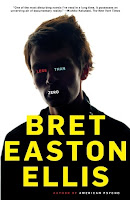
Less Than Zero

At first, I was skeptical that Ellis could write and publish such an acclaimed book at the age of nineteen. Then, I totally bought into the idea. Then, I actually read the book.
The story centers on Clay, a college student returning home to Los Angeles during his winter break. At first, his biggest problem is resolving his relationship with ex-girlfriend Blair. His hometown is unromanticized, and crawling with characters who are darkly apathetic at best and downright evil at their worst. At first, his friends' depravity seems harmless enough - the typical mischief one would expect of inherently wealthy young adults taking designer drugs. Soon, though, Clay is describing cocaine causing blood to come out of his nose, a torture porn viewing which the other characters discuss with vague disinterest, and ultimately a dead body and a young girl being raped by his friends.
The core plot outlines Clay's attempt to find his friend Julian, who disappears after Clay loans him a large sum of money to ostensibly pay for an abortion. Clay tries to track him down, with many suggesting that Julian has died. When he does finally locate him, Clay finds out that Julian has a major heroin problem and has taken to whoring himself out - literally - to get himself out of debt. Julian's problem is like quicksand, though, and Clay sees how the more Julian struggles against it, the further in he sinks.
Through all of this, Clay's narrative occasionally provides us glimpses into his privileged past as he tries to pinpoint the moment he lost all passion for life. He suggests a summer spent at his grandparents' mansion in Palm Springs may have been the turning point, after which his grandmother died and things began to decay.
Ellis's prose is cold and crisp to the point of harshness, which aptly fitting of the apathetic characters in the novel. As the novel is told through Clay's perspective, everything is viewed through his disinterested and disaffected lens. The novel itself feels very episodic, which could be a flaw if it did not feel intentional. (Wouldn't a life with limitless time and money and lacking any obligation seem like a random string of events connected only by recurring locations and characters? It would to me. But, then again, I'm poor in money and imagination.)
Aside from its brutality and bluntness and the look-what-he-did-at-nineteen factor, the book has some features of literary merit. For example, the theme of individual insignificance in the face of such a cold and cruel city is hammered home in some interesting ways. The punk group X repeatedly pops up which (aside from hopefully inspiring people to go out and buy their music) suggests an anonymity and facelessness to the background noise of these characters lives - the band doesn't even have a real name, just the mathematical variable "X" which could be anything. There is also the not-so-subtle "You could disappear here" billboard which haunts Clay at various intersections in Los Angeles, vaguely reminiscent of the "Eyes of T. J. Eckleburg" in "The Great Gatsby."
I'd recommend this book with one caveat: there are some moments of gruesome brutality which are hard to read. Given the anhedonia of the characters, though, it's hard to tell whether or not the reader is supposed to feel anything in these scenes. And that may be the most disturbing feature of the book.
Labels:
1985,
book,
book review,
Bret Easton Ellis,
fiction,
Less Than Zero
Friday, January 15, 2010
Everyman

I picked up Philip Roth's 2006 novel "Everyman" at the Newport Beach Friends of the Library bookstore a while back for a mere single dollar. After reading this book, I wish I still had my dollar.
A little background: When I was an undergraduate, the name Philip Roth was tossed around a lot as one of the great contemporary American writers. I picked up and read his book "American Pastoral" and was completely underwhelmed. I didn't get it. I didn't see what the big deal was. I flipped through it again, thought about it, and still couldn't figure out why people were so enamored with that book. At that point, I just let it go and postulated that I would try it again later.
So I went into "Everyman" with a lot of trepidation tempered with a lot of hope. Trepidation because my mind still ached with the disappointment of my first attempt. Hope that maybe this book would hook me more than the first and that it would finally all come together for me. Unfortunately, it was about halfway through the book that the hope died.
Briefly, "Everyman" begins with the funeral of the unnamed protagonist, attended by a scant few people who came to pay respects to a man to whom they connected but not necessarily attached (such as his two sons from his first marriage). The book then backtracks and jumps around to various episodes throughout his life which provide insight into his broken relationships with the people at the funeral.
I guess my biggest problem was that I felt no sense of attachment, or pity, or sympathy, or anything for the protagonist. He was a philanderer, a misanthrope, a malcontent, and, ultimately, a cranky, whiny, sick old man. I understand the idea that as the "everyman" he is an imperfect being, acting on his impulses, but I still could not dig out any flake of interest in his life. It's not that I was taking some sort of moral stance against this character (consider my half-decade interest in the semi-perverse Leopold Bloom of "Ulysses"), but I never felt like accepted any control over his life. Many of his internal monologues blame others or ask others to consider his perspective, but he never tries to consider anyone else's feelings.
From a literary analysis perspective, the book was weak. The "begin at the end" structure of the novel is unimpressive. The various chunked episodes are too choppy and disconnected (although, consider life - isn't that how it is?). The protagonist is static and flat, and the minor characters are somehow flatter than flat. Nothing clicked together or jumped out as being of any literary importance. Instead, it seemed more like a formulaic novel written by an aspiring creative writing student than a potential masterpiece by an iconic writer.
I guess I just felt that the book was merely a book, and not some sort of intellectual or moral challenge - and not that I require that of all my books, but I do of books that come wrapped in such mystique and renown. But, if the book merely exists as a forum for fiction, I'd rather spend my time reading some genre works.
Sorry, Philip Roth. Maybe I'll try "Portnoy's Complaint" or "The Human Stain" in a few years. But I'm not sure I'm ready to go out with you again yet. Perhaps we should see other people.
Labels:
2006,
Everyman,
fiction,
novel,
Philip Roth
Thursday, November 19, 2009
You Don't Love Me Yet

After a heavy read like "Blood Meridian," I tried to ease up a bit and read something a little more lighthearted. Glancing at my shelf, I saw a book I had found in the bargain bin at Barnes and Noble, got excited about and bought, and then instantly forgot about - Jonathan Lethem's 2007 novel "You Don't Love Me Yet."
The book follows a few months in the life of Lucinda Hoekke, tracing the rise and fall of her unnamed band. As the novel begins, she is working for an abstract artist answering and documenting phone call complaints. In her free time, she jams with a band which seems to have a lot of potential (in terms of character), but which hasn't written a breakthrough song, or even played a gig. One day she gets a call from a complainer (a recurring complainer, in fact), and she falls in love with him. During the conversations of their affair, she picks up on several unique phrases - such as "monster eyes" - which inspire her to help write some lyrics which eventually become the bands strongest song. The band gets their first gig at a failed art experiment which morphs into a real party and gets them some positive attention Unfortunately, the complainer was also at the party, and leverages his creation of many of their lyrics into making the band let him join. The complainer then sabotages the band's radio appearance, and they miss their big chance. Yet, in the end, everyone is paired off and happy.
(Oh yeah, and somewhere in the book is a subplot about the guitar player kidnapping a kangaroo from the LA zoo and the zoo denying it to save face.)
The book's biggest limitation was the inability to actually hear the band. Very little is ever even said about how their music would sound - there is a distinct lack of sensory detail for the reader's ears (if that makes sense, somehow).
I remember that there was a lot of negative feedback for Lethem when the book came out. And not undeserved, I can confidently say. This novel pales in comparison to his other novels, and isn't even in the same league as his masterpiece - "The Fortress of Solitude."
But, on the other hand, this novel never really aspires to be that type of book. So how can we complain when it doesn't achieve it? It's more like the outline for a romantic comedy with a twist-of-Lethem (mostly in the names of the characters). It
I can say that it was a nice, smooth read, and that it didn't require a lot of thinking - unlike "Walden" and "Blood Meridian." I can't say that it belongs on the same shelf as those books, though. It doesn't. It just doesn't.
Labels:
2007,
book,
book review,
fiction,
Jonathan Lethem,
novel,
romance,
You Don't Love Me Yet
Subscribe to:
Posts (Atom)
